
Roland/Dallape – Towards the Future
On Tuesday, 14th September 2010 a historical decision was taken in the City of Stradella, Lombardia, Italy, between the multinational Japanese company Roland and one of the oldest accordion manufacturers in Italy, the company Dallapé. ….welcome to the high technology ROLAND “digital Dallapé Sound of Music”. |
| by Holda Paoletti-Kampl |
| Click each picture to view the full sized picture. | |
 |
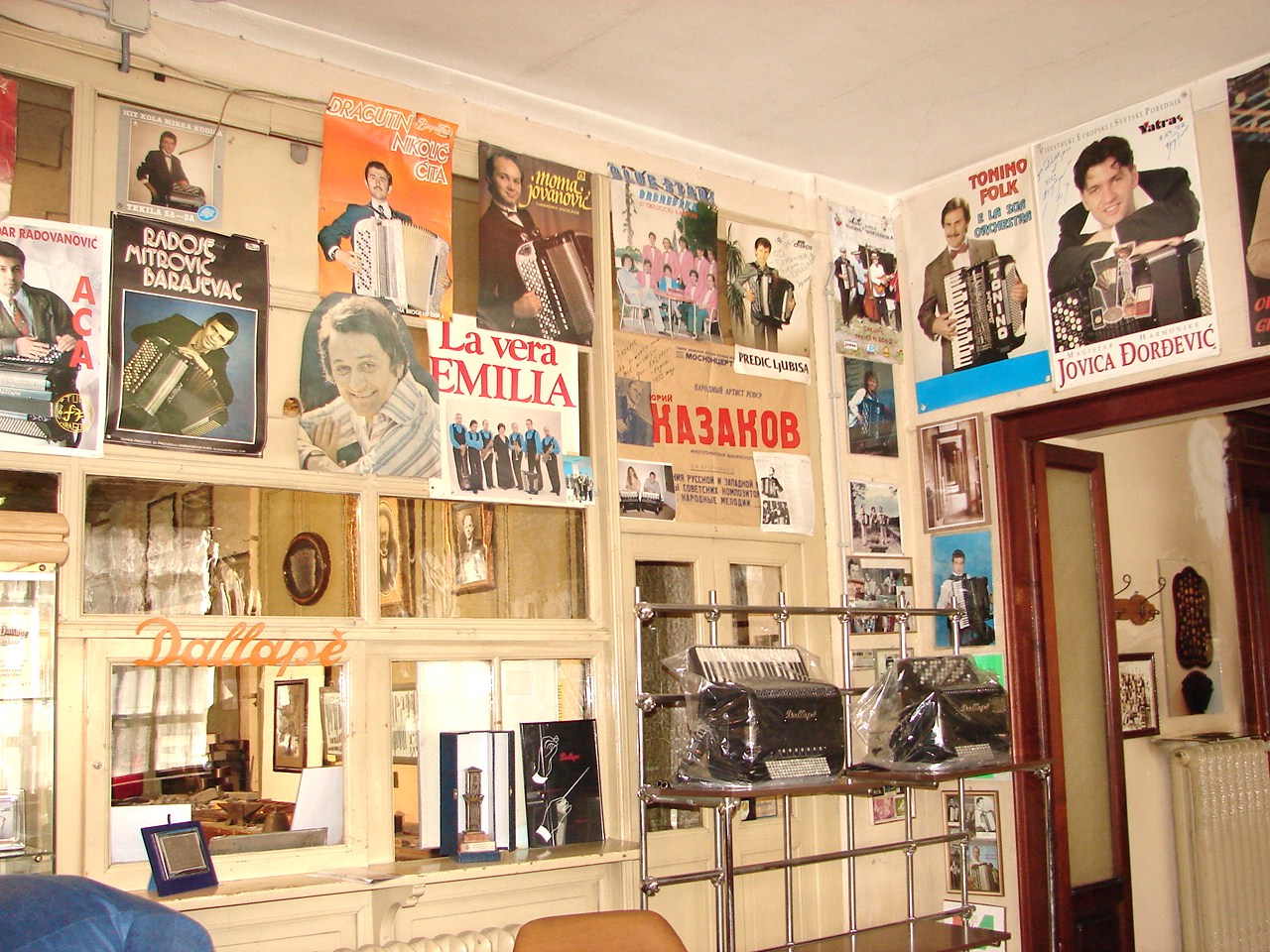 |
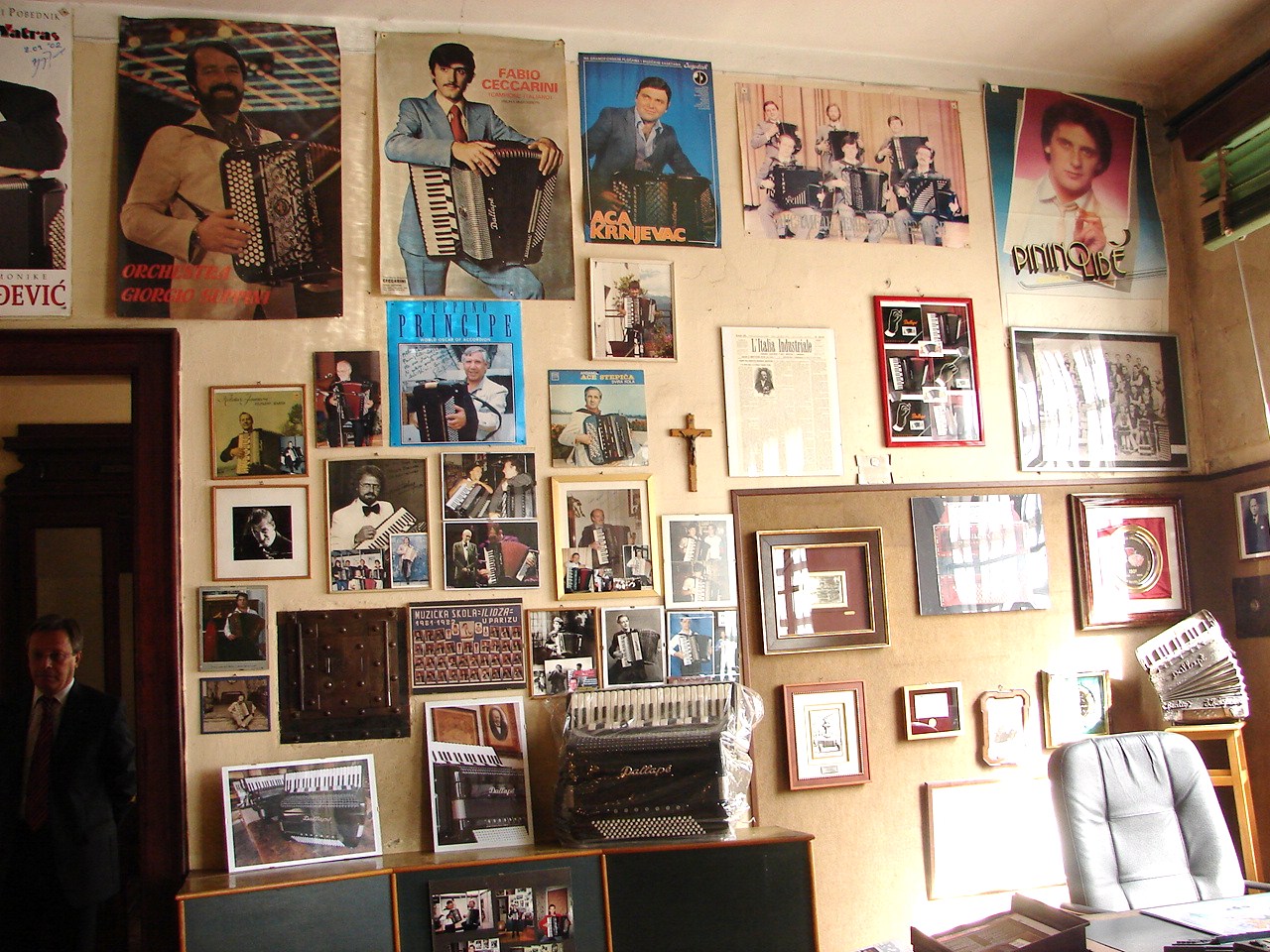
| Images of current Dallapé Main Office with photos and posters | of artists using Dallapé accordions. |
 |
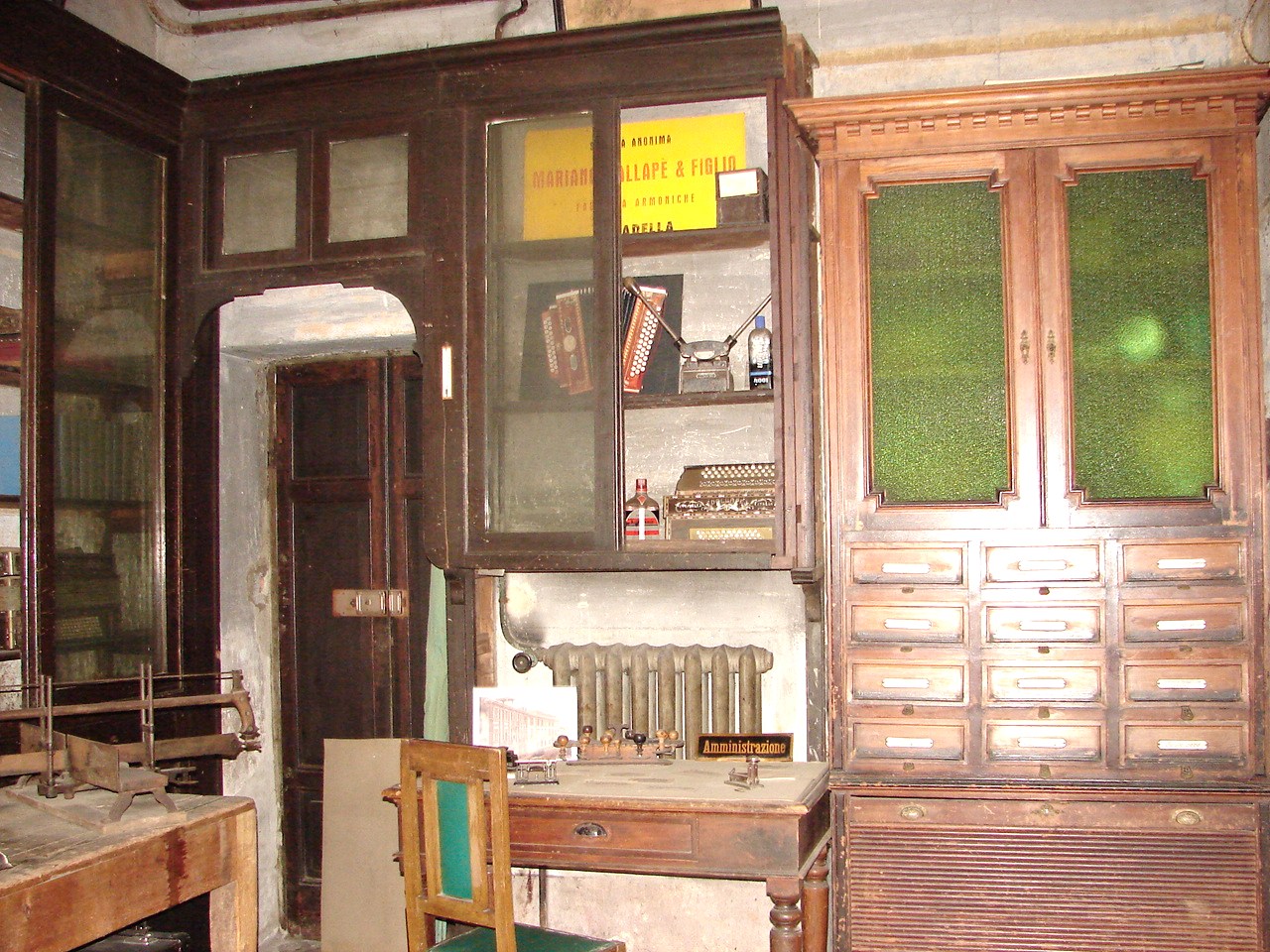 |
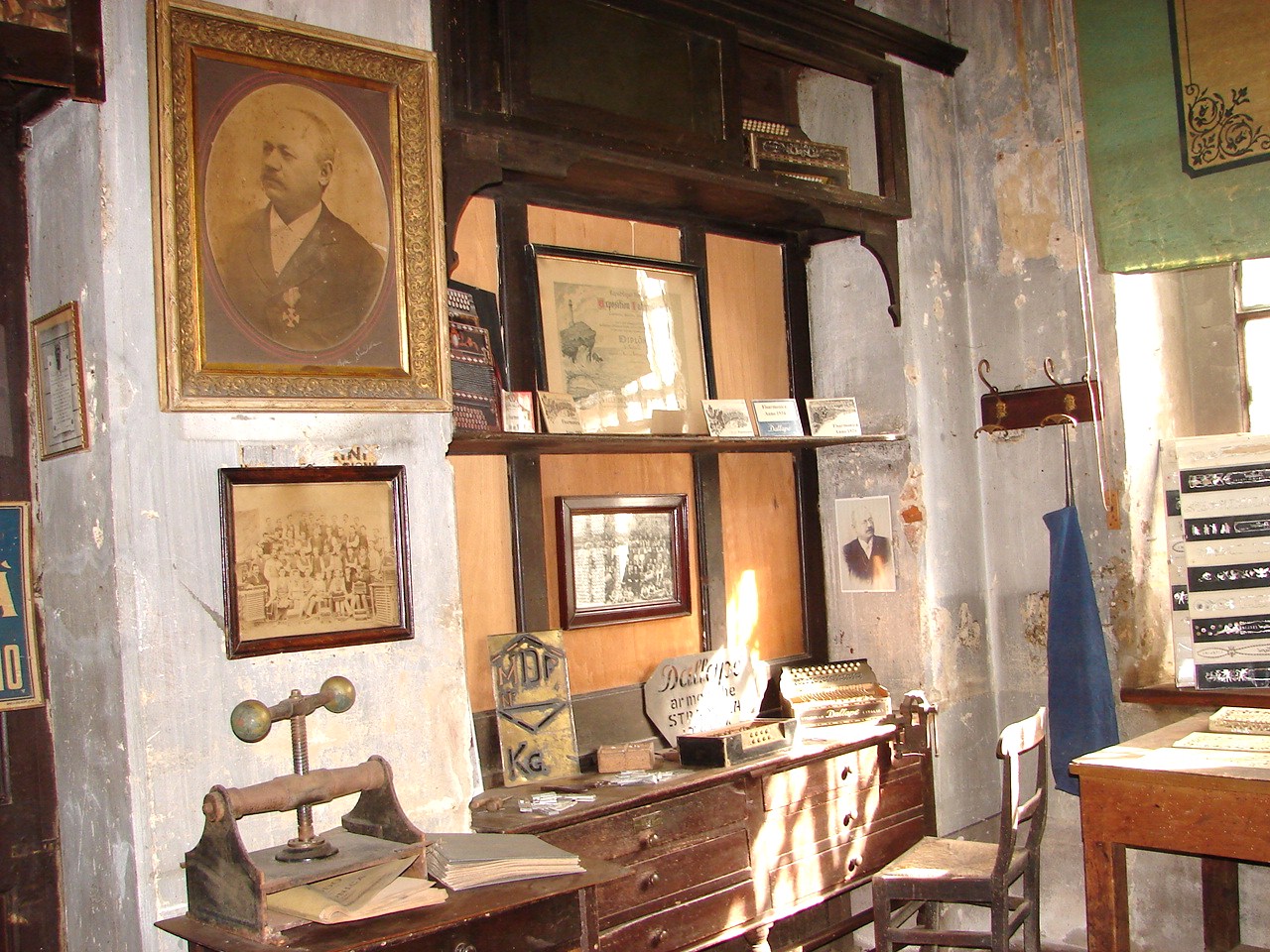
| Images of the original office and laboratory of Mariano Dallapé. | As before |
 |
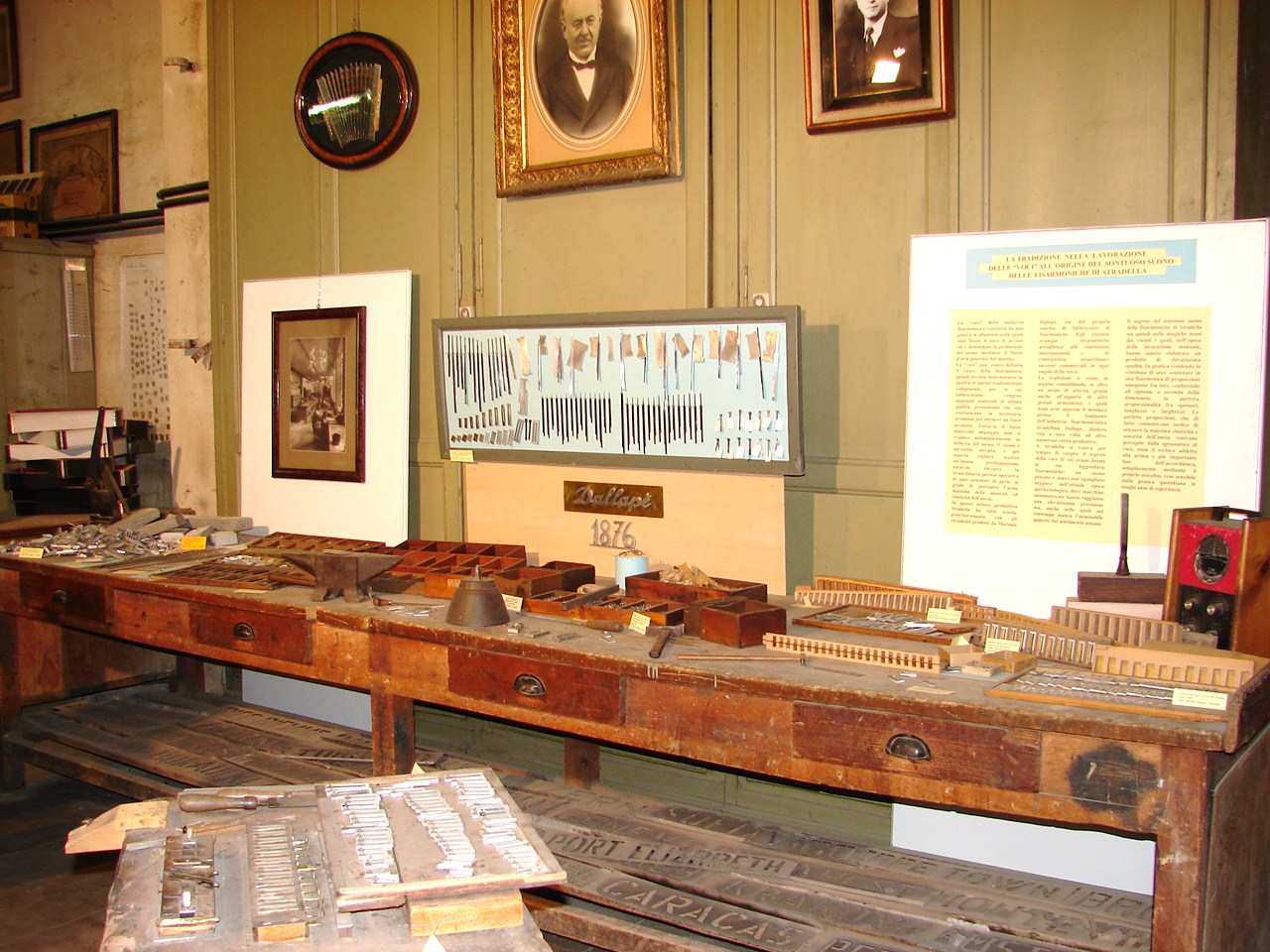 |
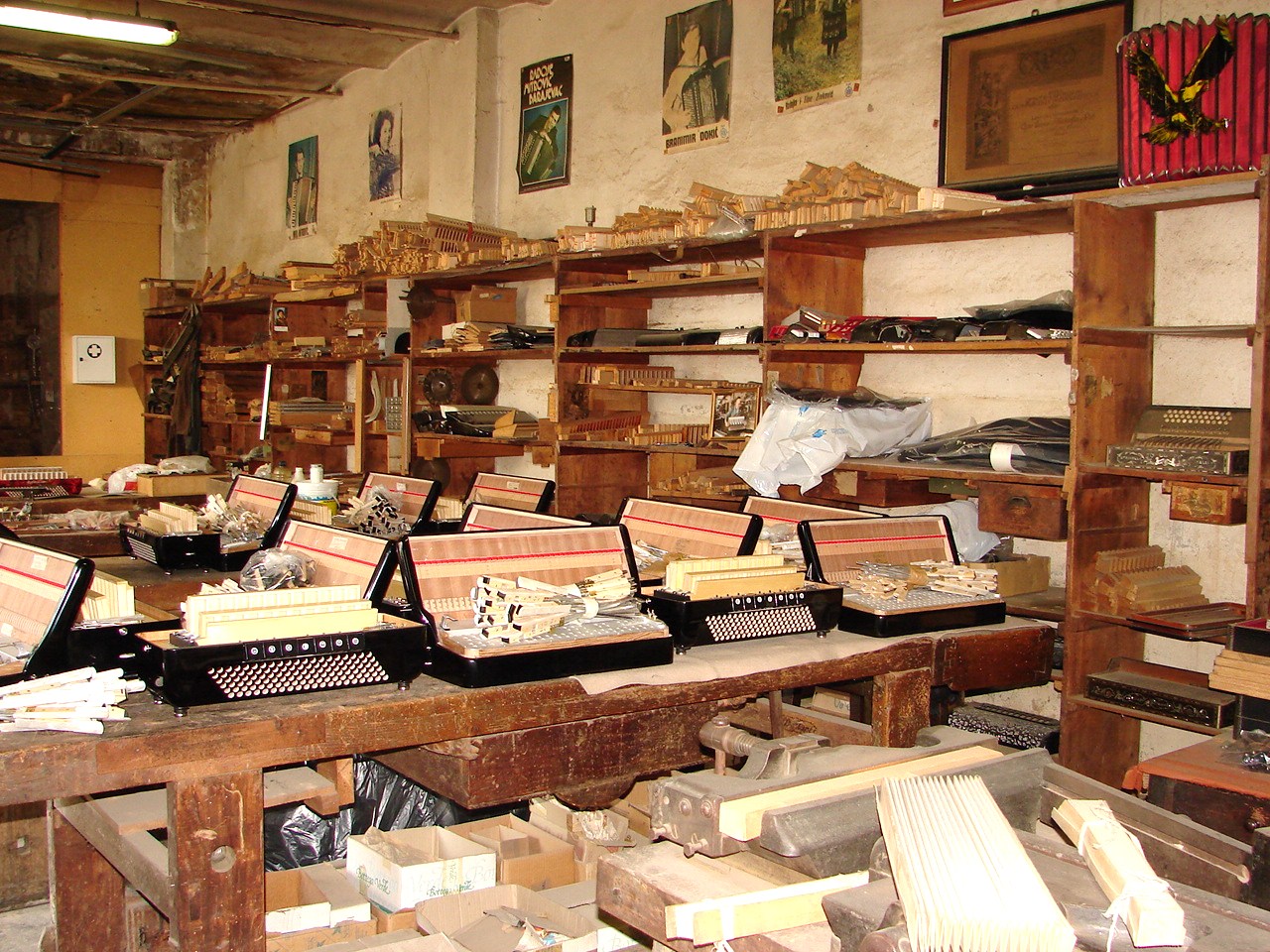
| As before | Images of the Dallapé laboratory |
 |
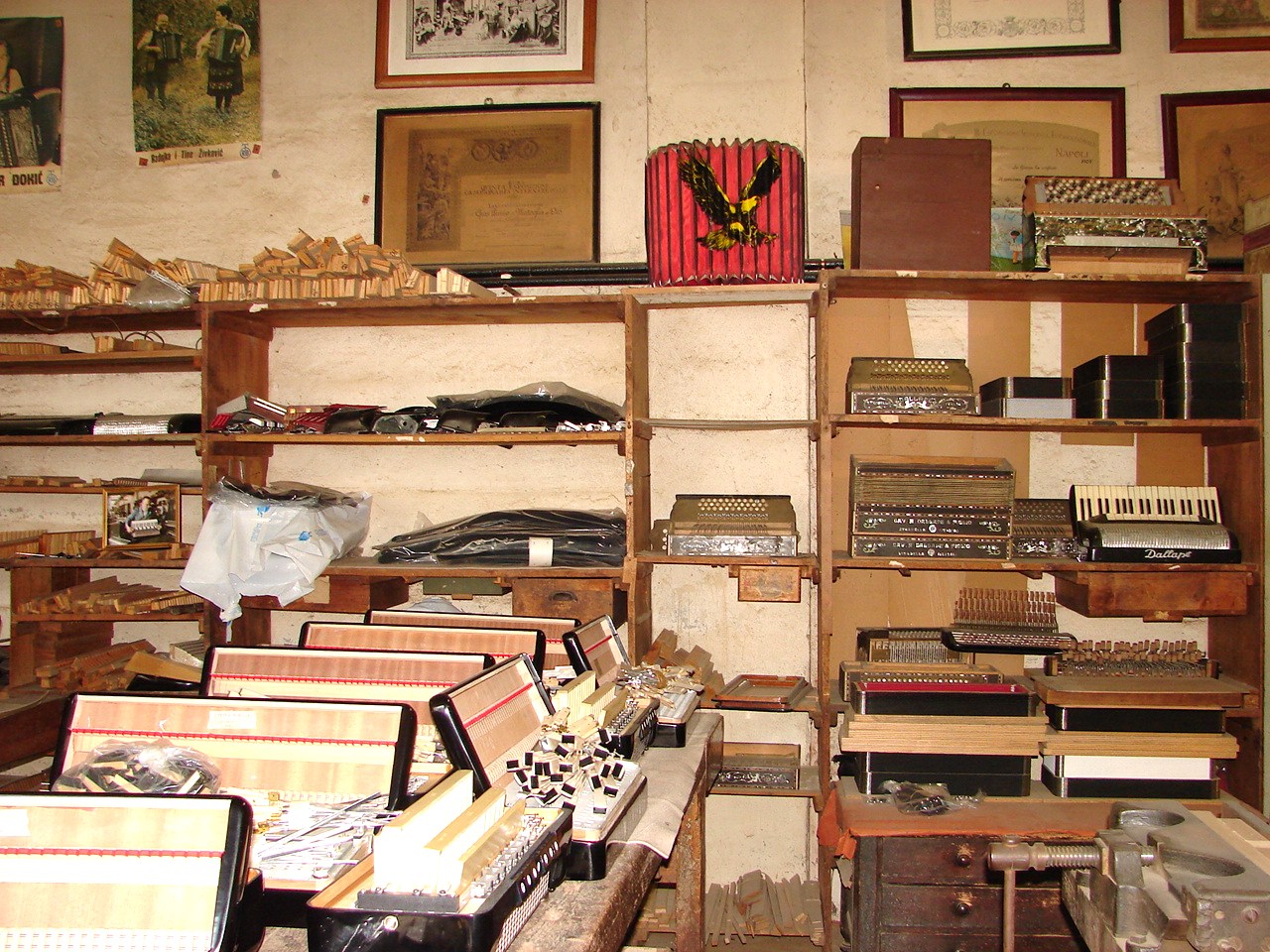 |
| and accordion factory. | As before |
 |
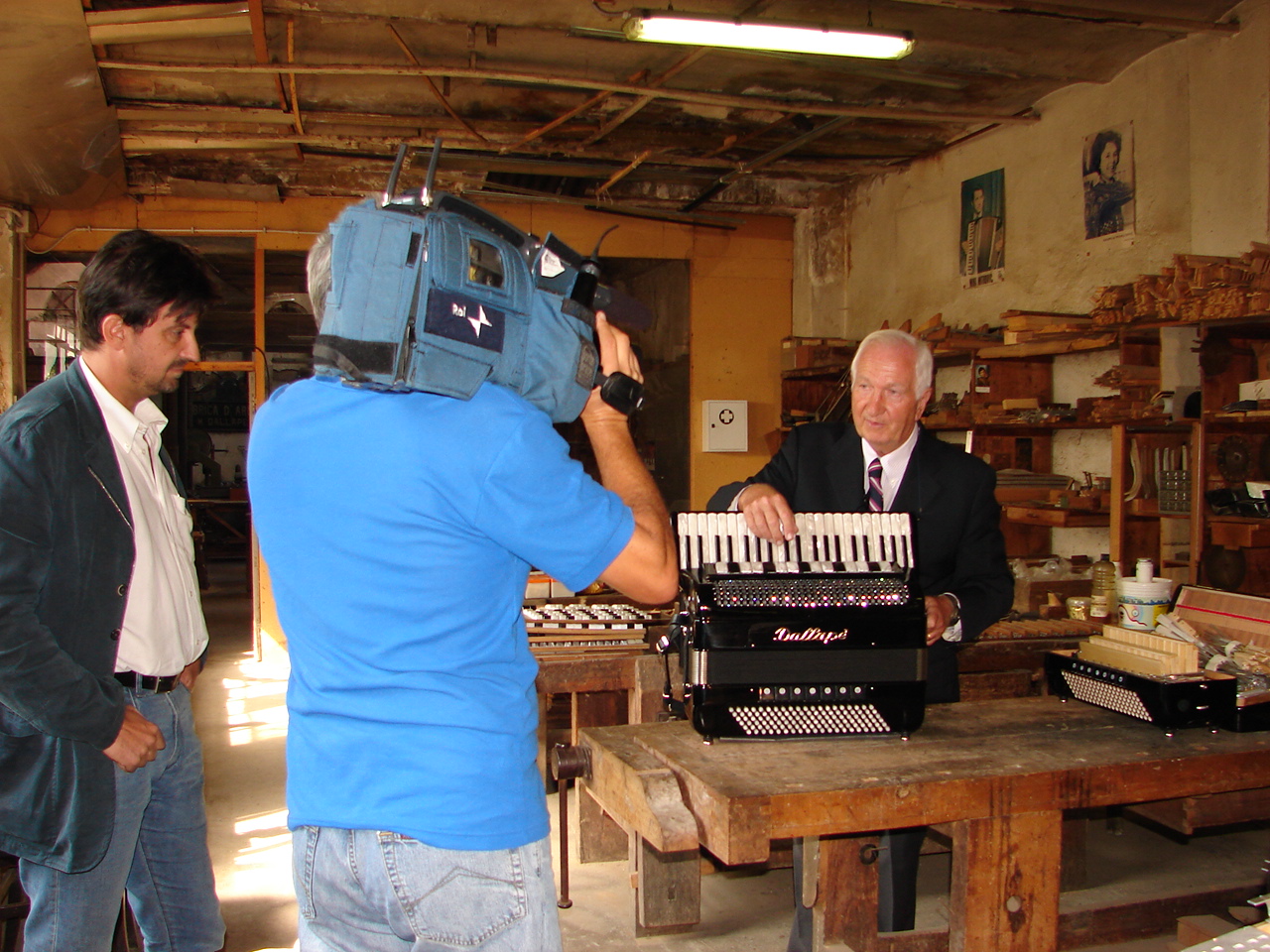 |
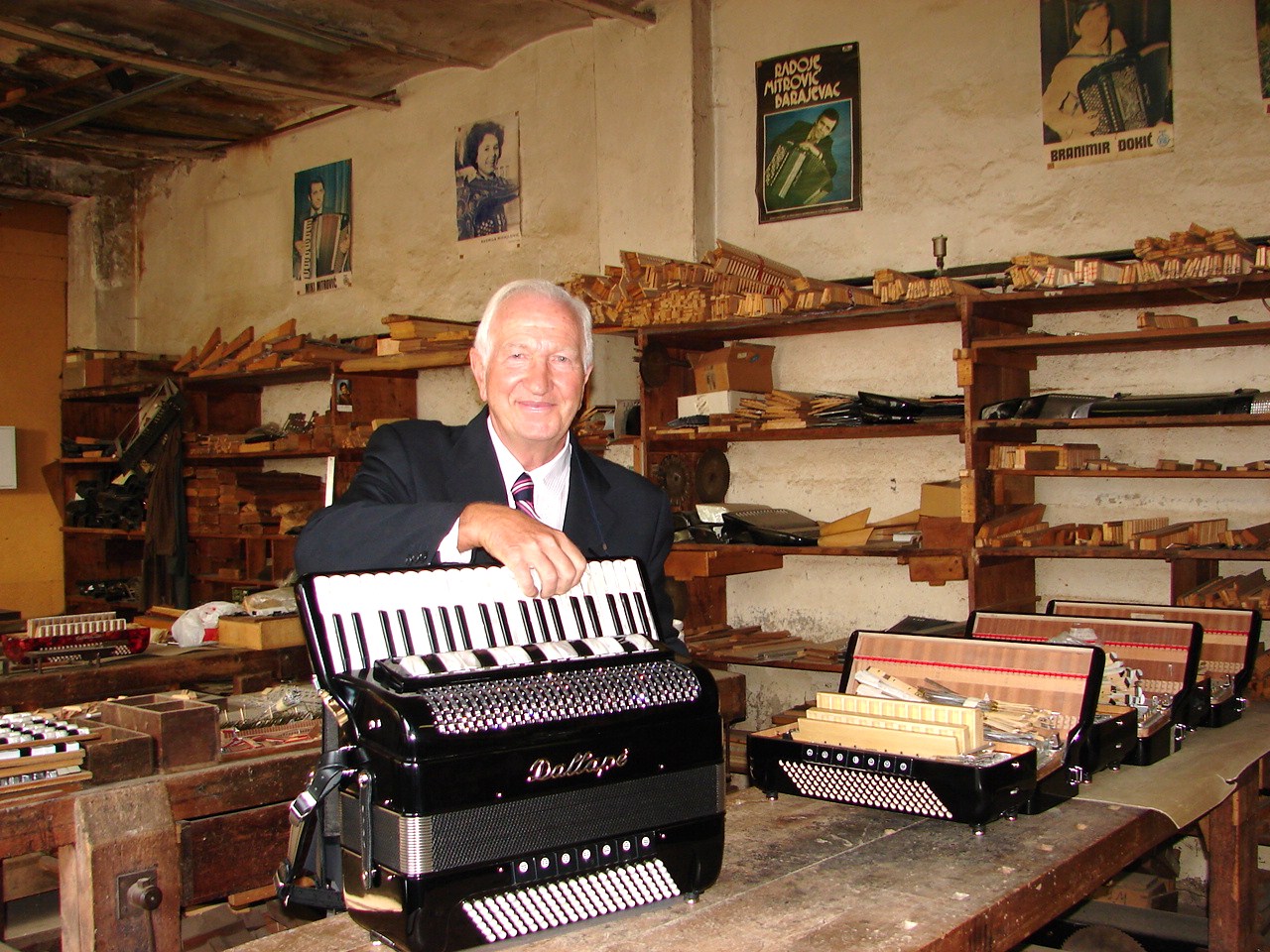
| Amleto Dallapé (Administrator) with the Dallapé accordion produced for the signing event. | Amleto Dallapé interview by Italian RAI Television. |
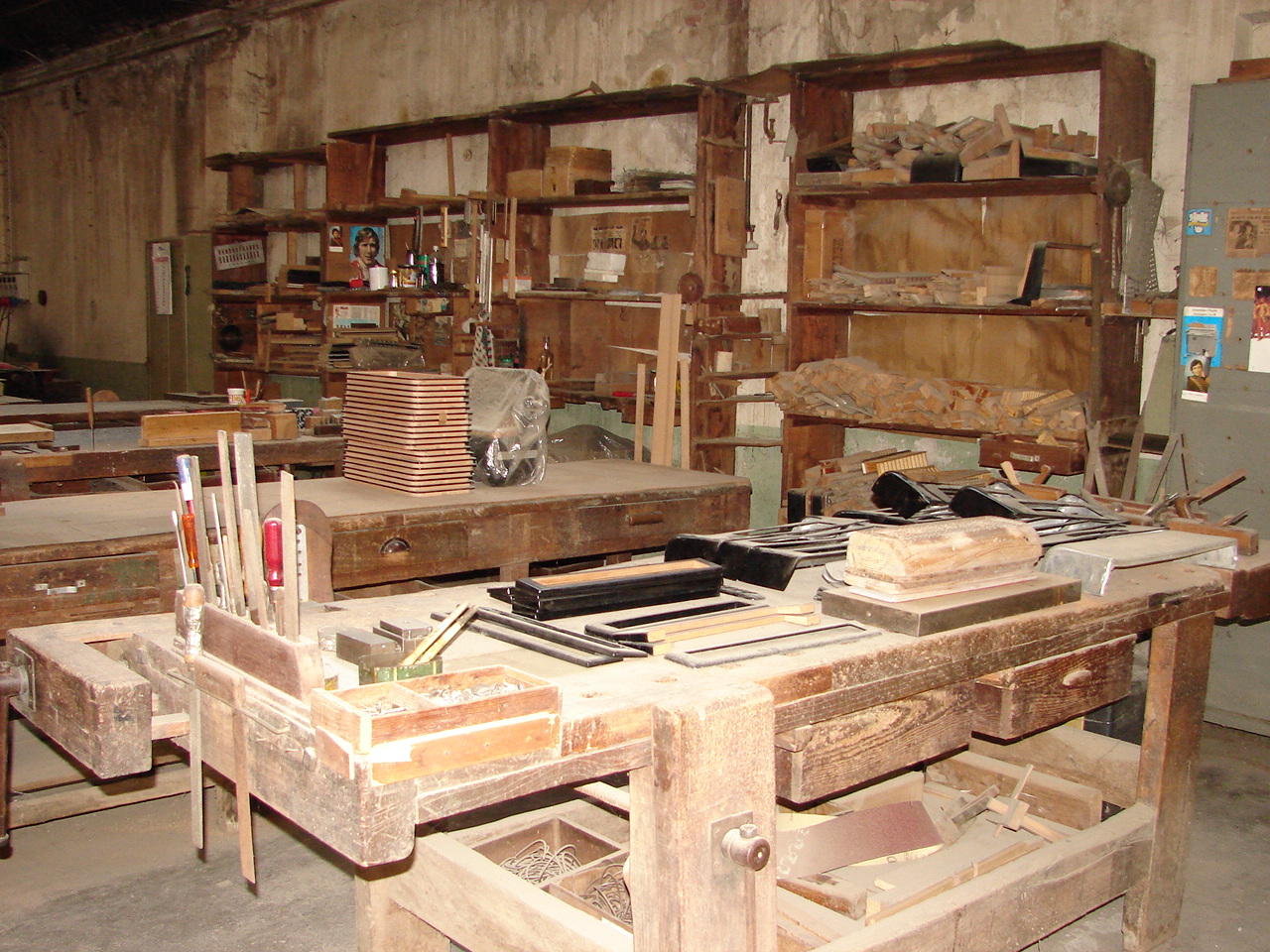 |
 |
| Photo of factory area. | Sign outside the building. |
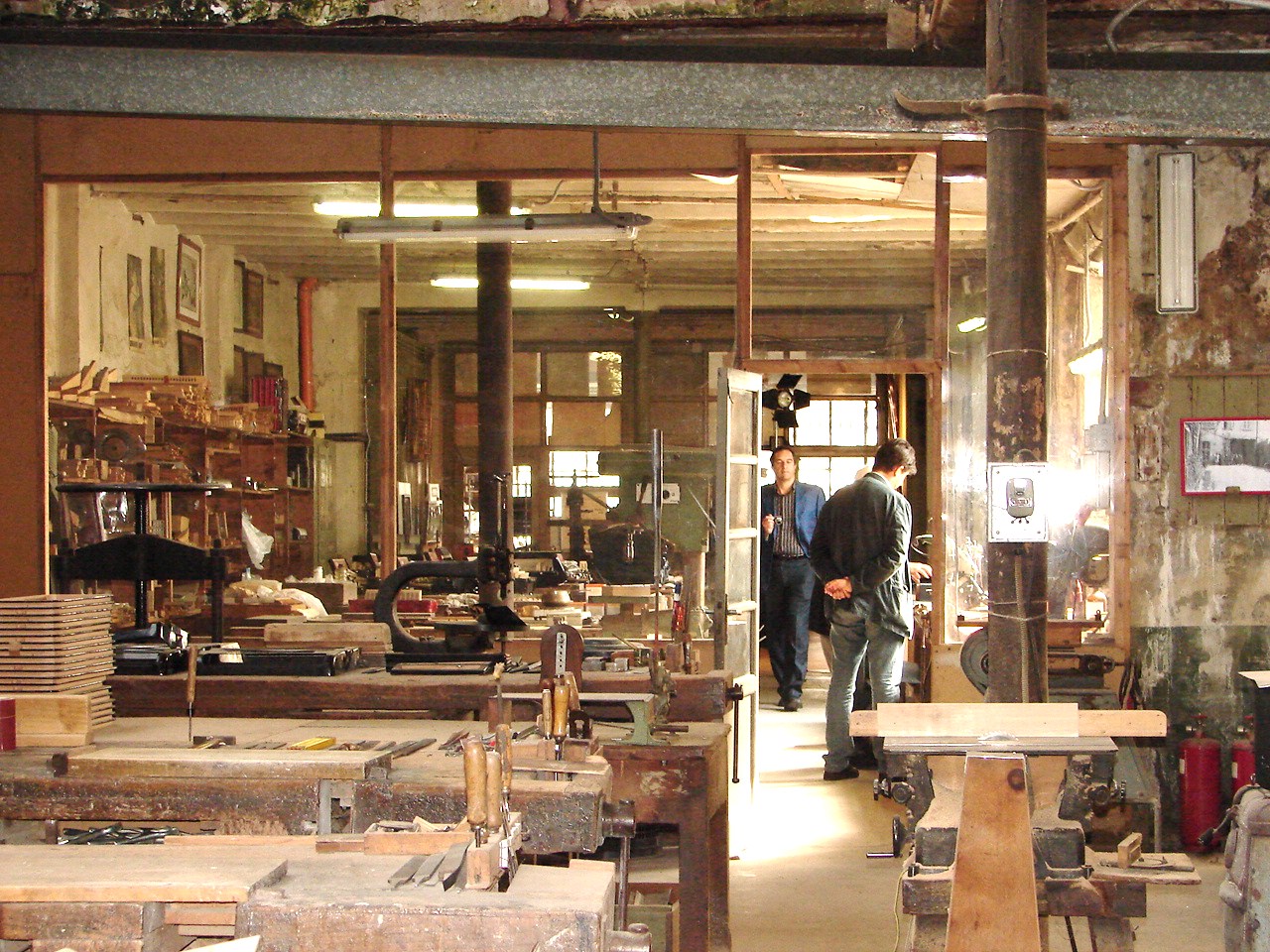 |
 |
| More pictures of the production area. | Bianca Maria Dallapé, Alfredo Maroni (Roland Europe President) and Amleto Dallapé checking the agreement documents in the original office and laboratory of Mariano Dallapé. |
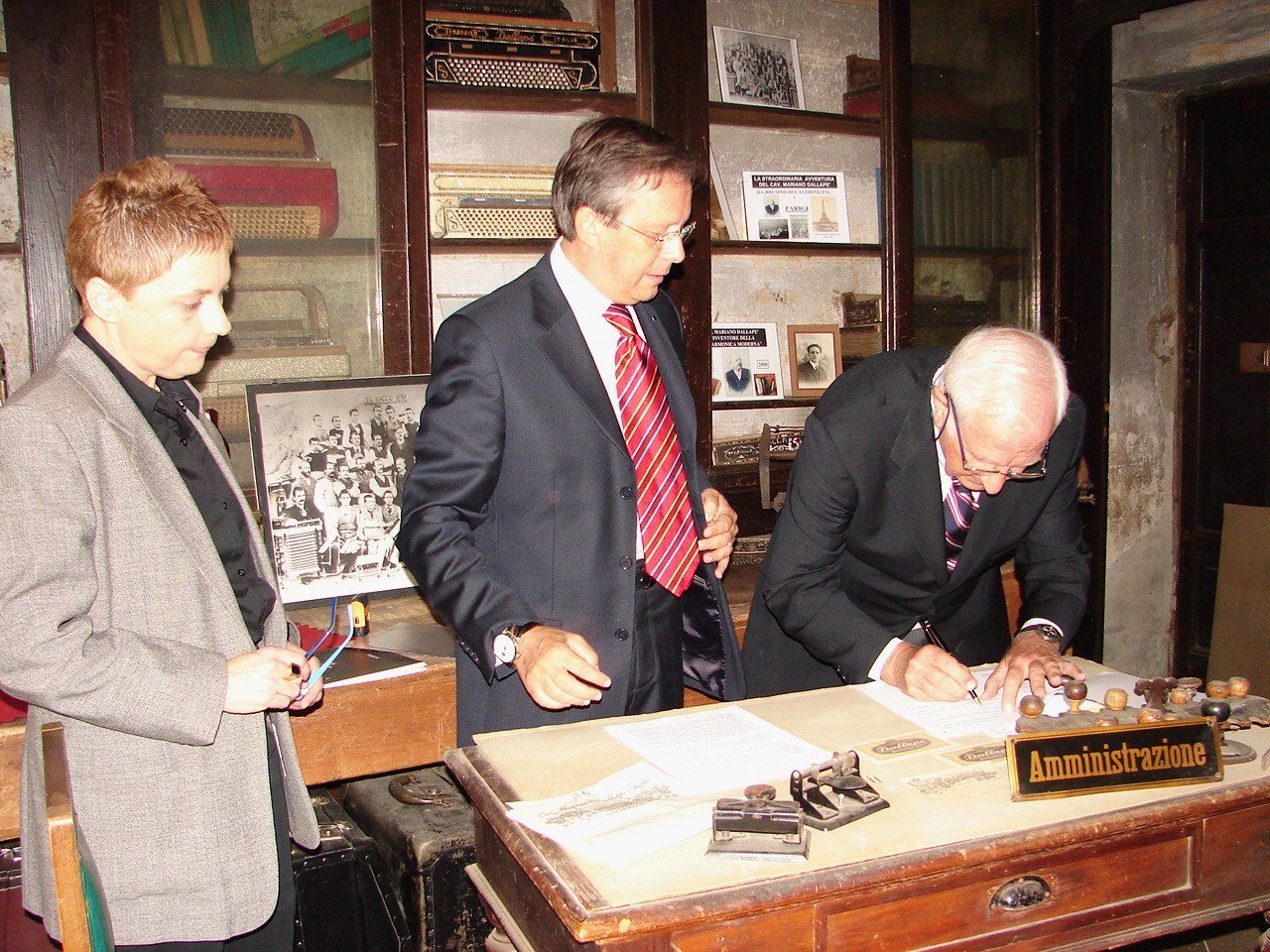 |
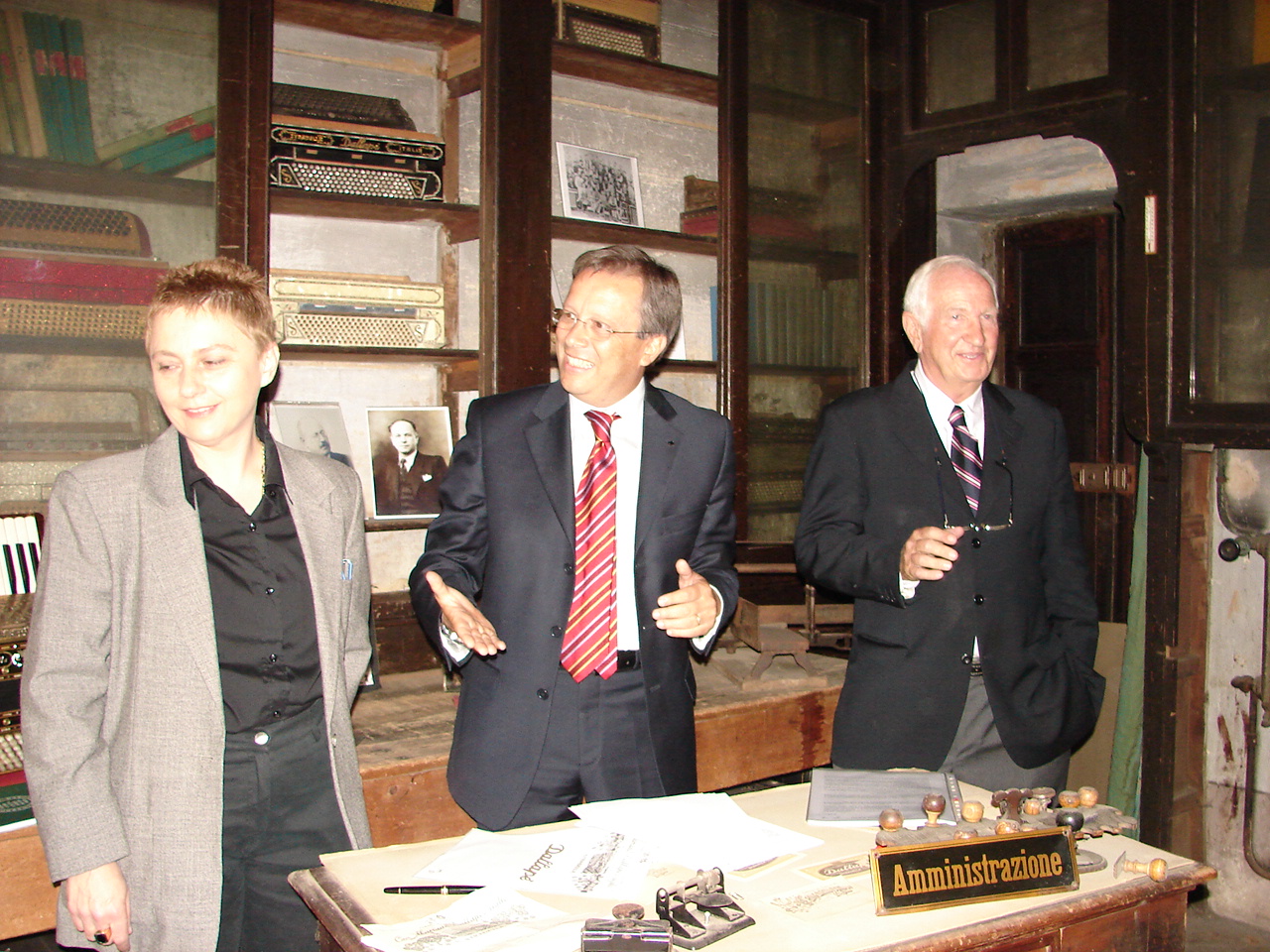 |
| The signing of the historic agreement. | Bianca Maria Dallapé, Alfredo Maroni (Roland Europe President) and Amleto Dallapé proceed to shake hands after the signing. |
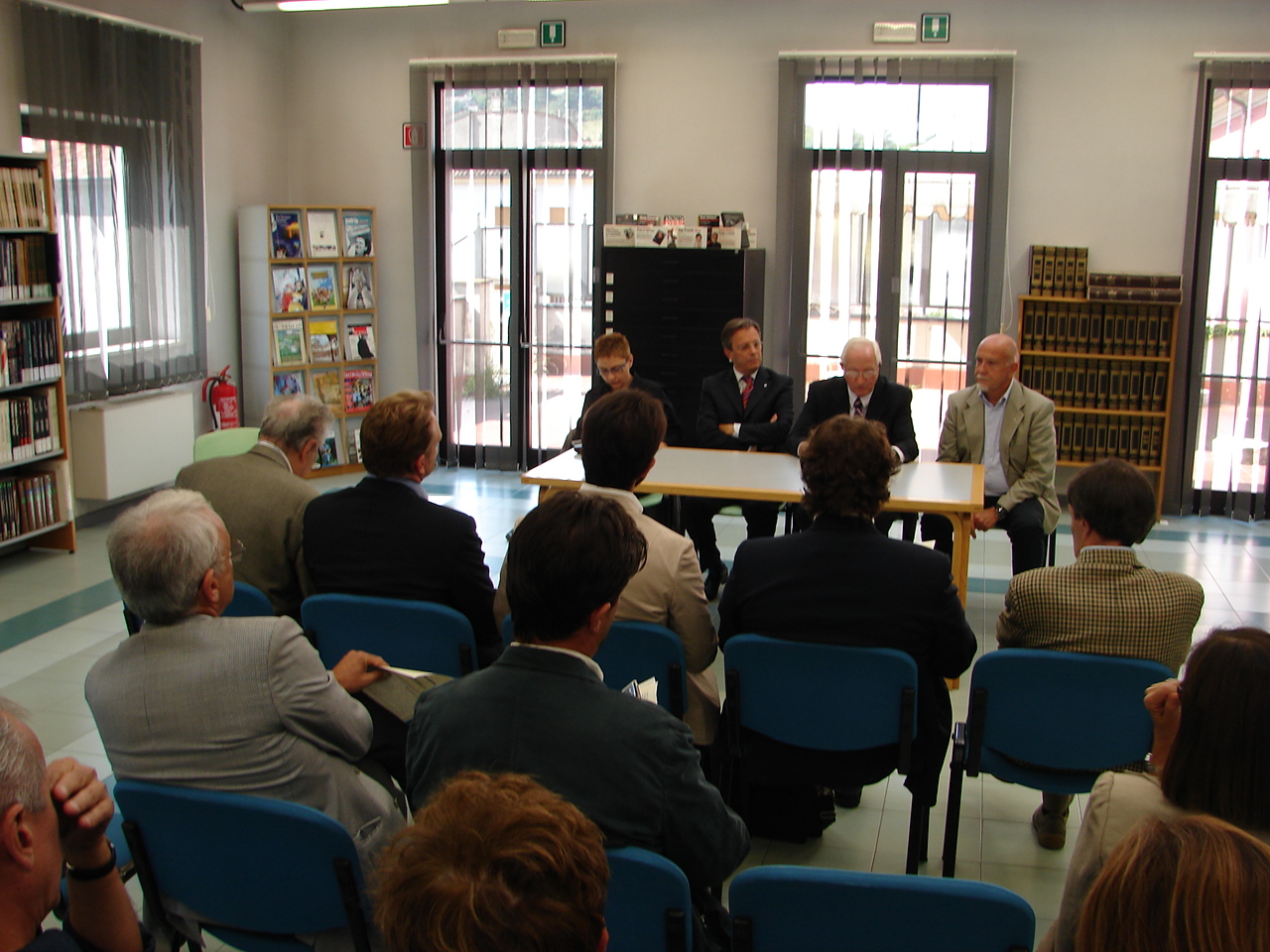 |
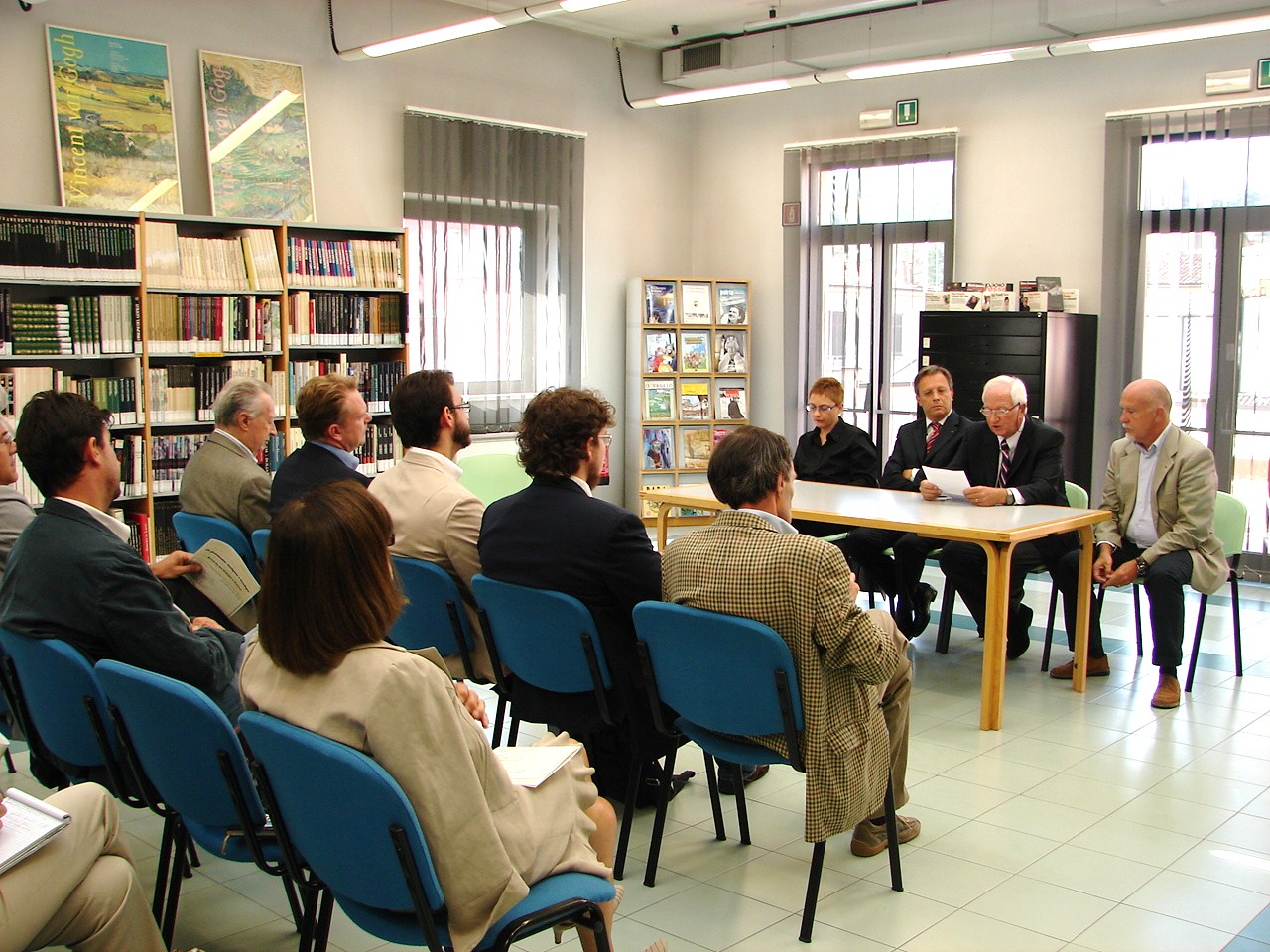 |
| Press conference at "Museo della Fisarmonica" (Accordion Museum) of Stradella. | At the main table are: Bianca Maria Dallapé, Alfredo Maroni, Amleto Dallapé and Luigi Bruti (Roland Europe Marketing Director). Speech by Amleto Dallapé. |
 |
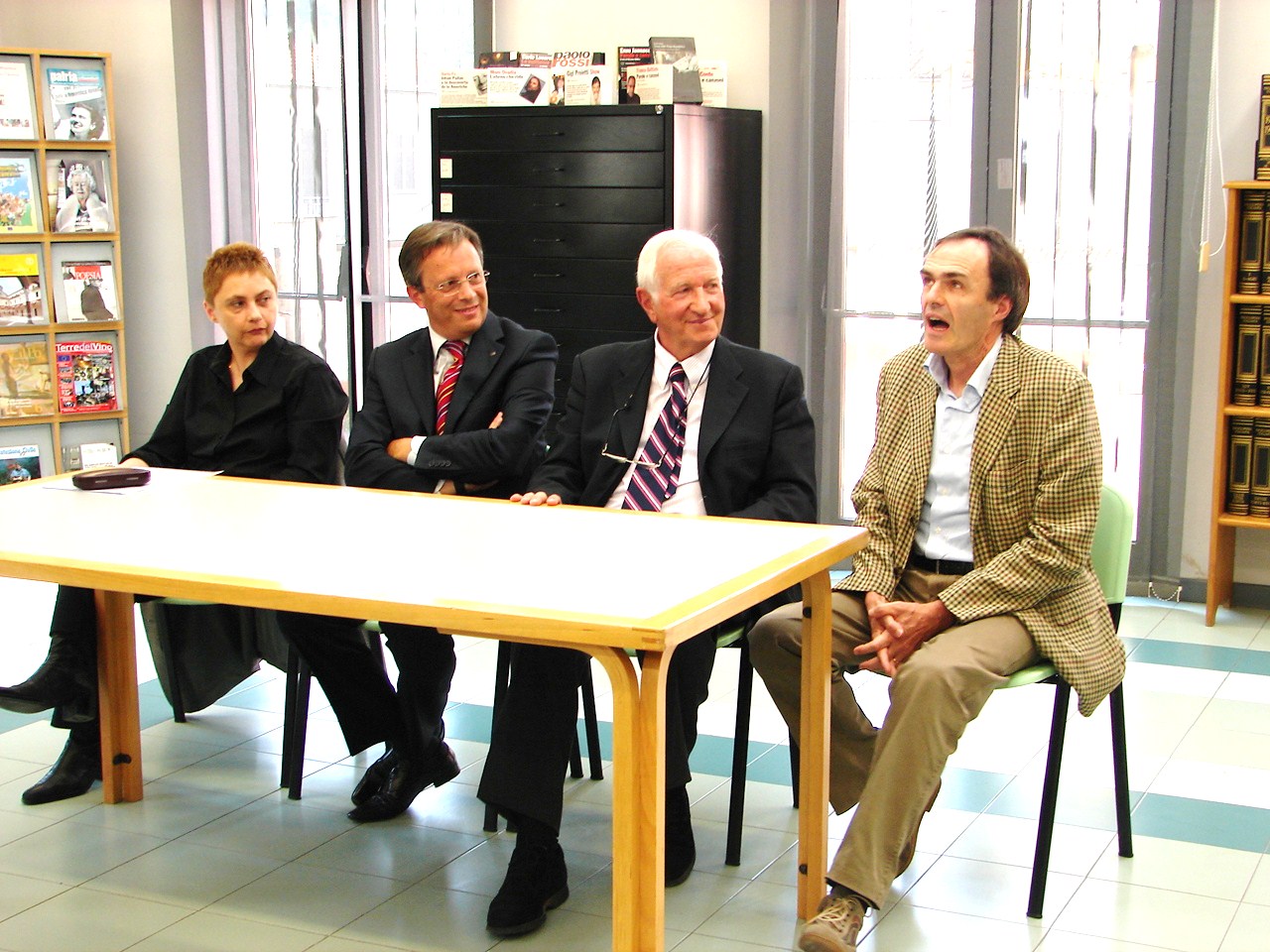 |
| Speech by Luigi Bruti (right). | Speech by Pierangelo Lombardi, Mayor of Stradella (right). |
 |
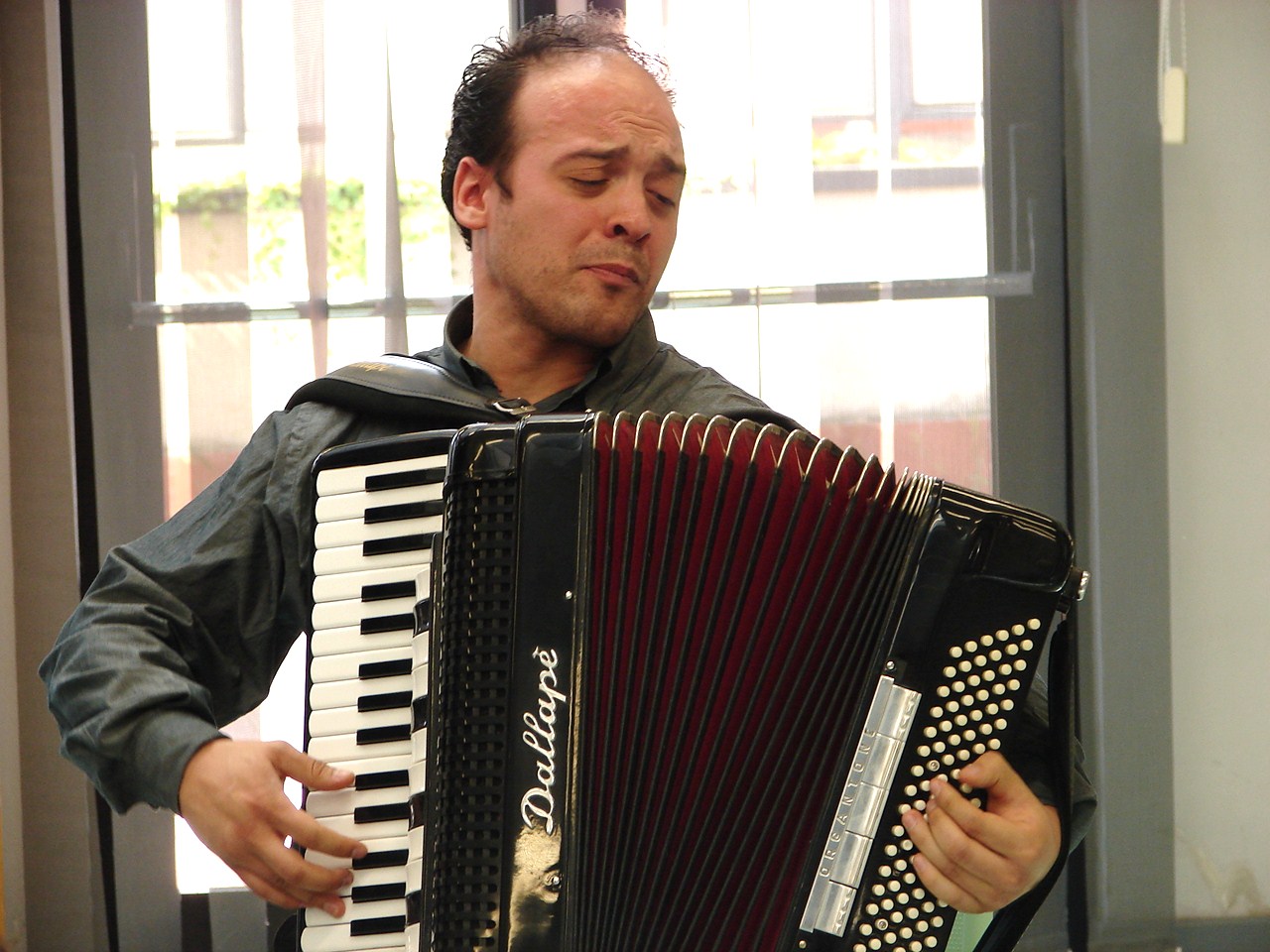 |
| Performance by Gianluca Campi | playing a Dallapé accordion. |
 |
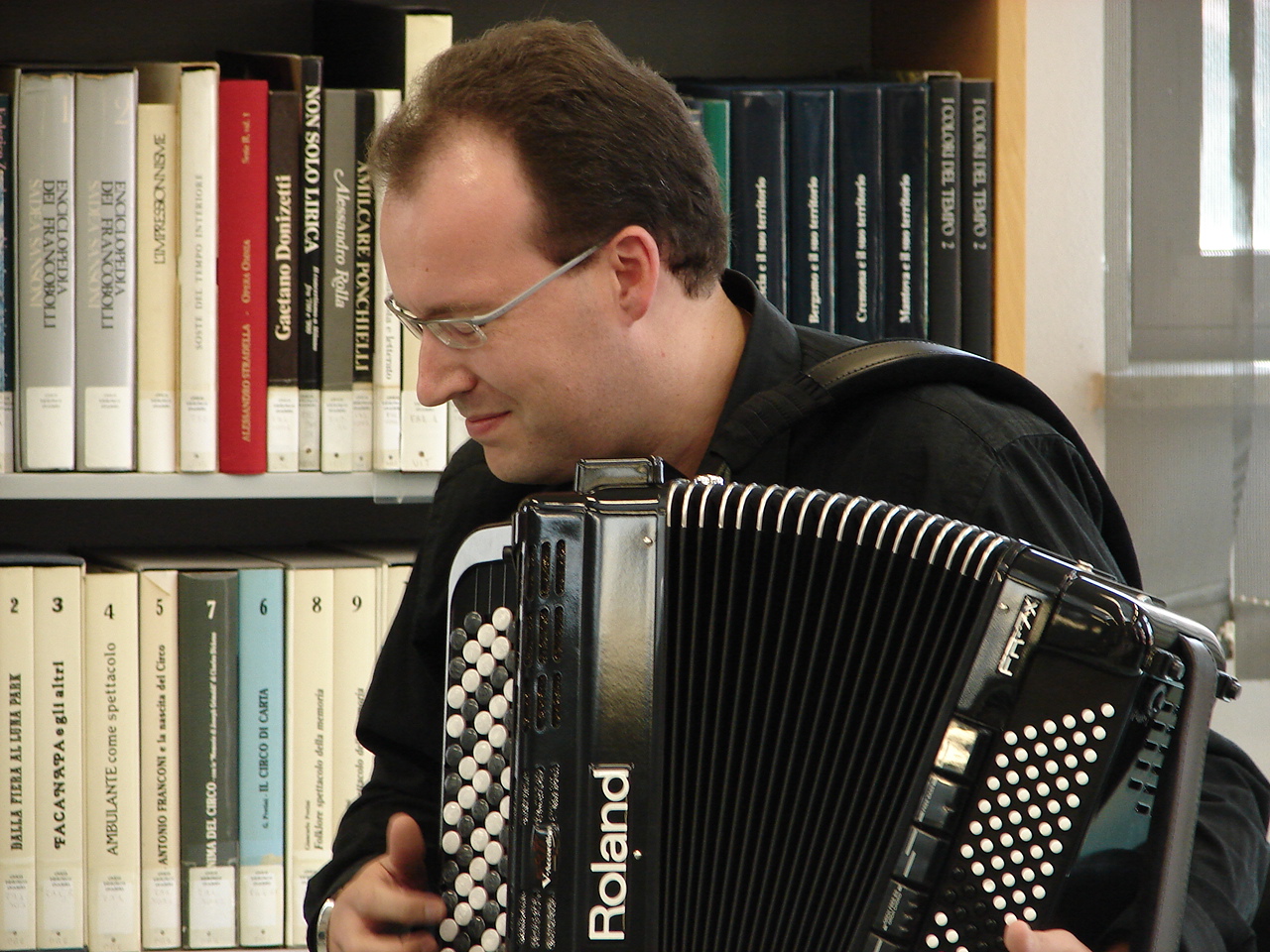 |
| Peformance by Ludovic Beier playing | the Roland FR-7x V-Accordion. |
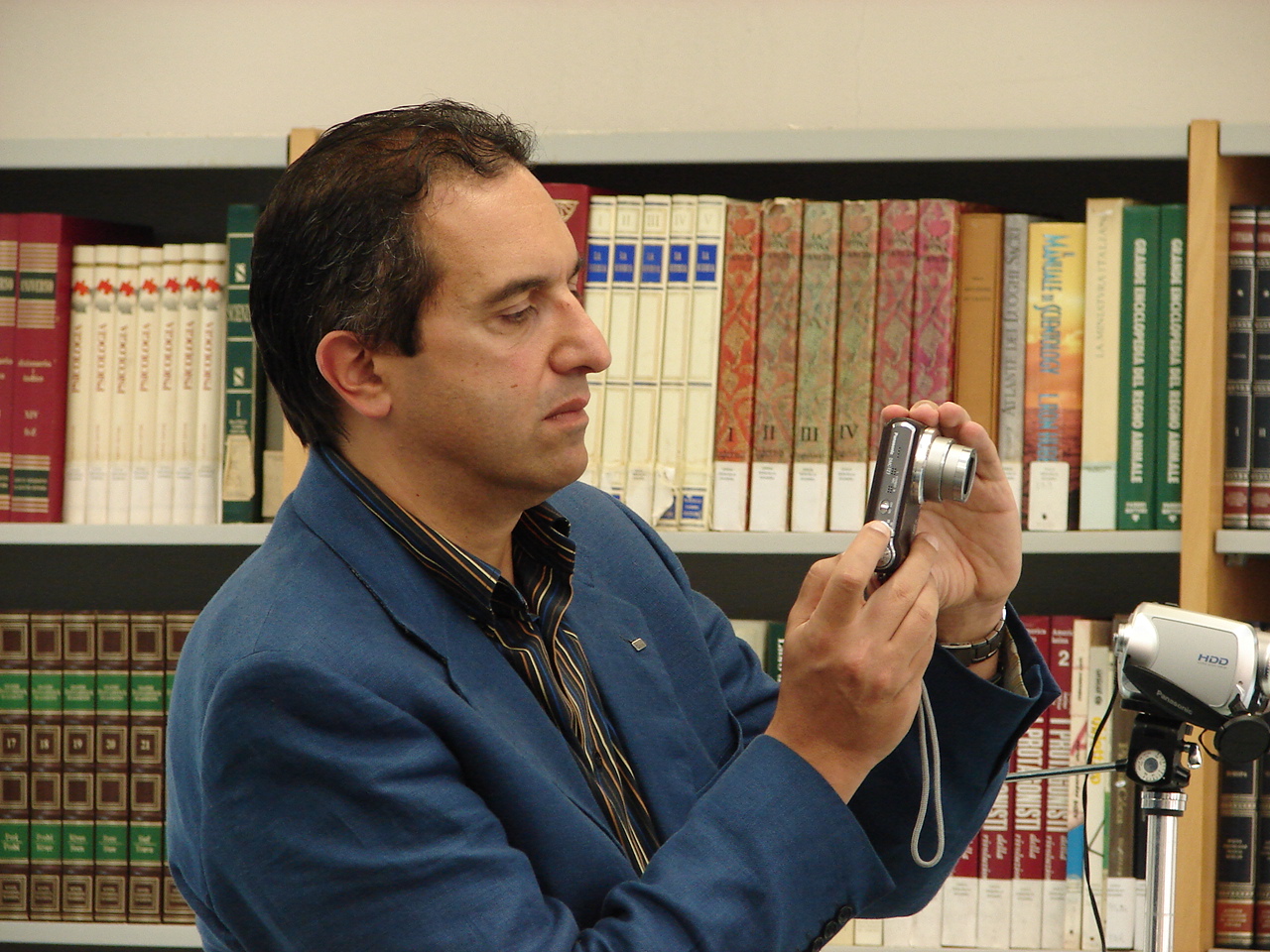 |
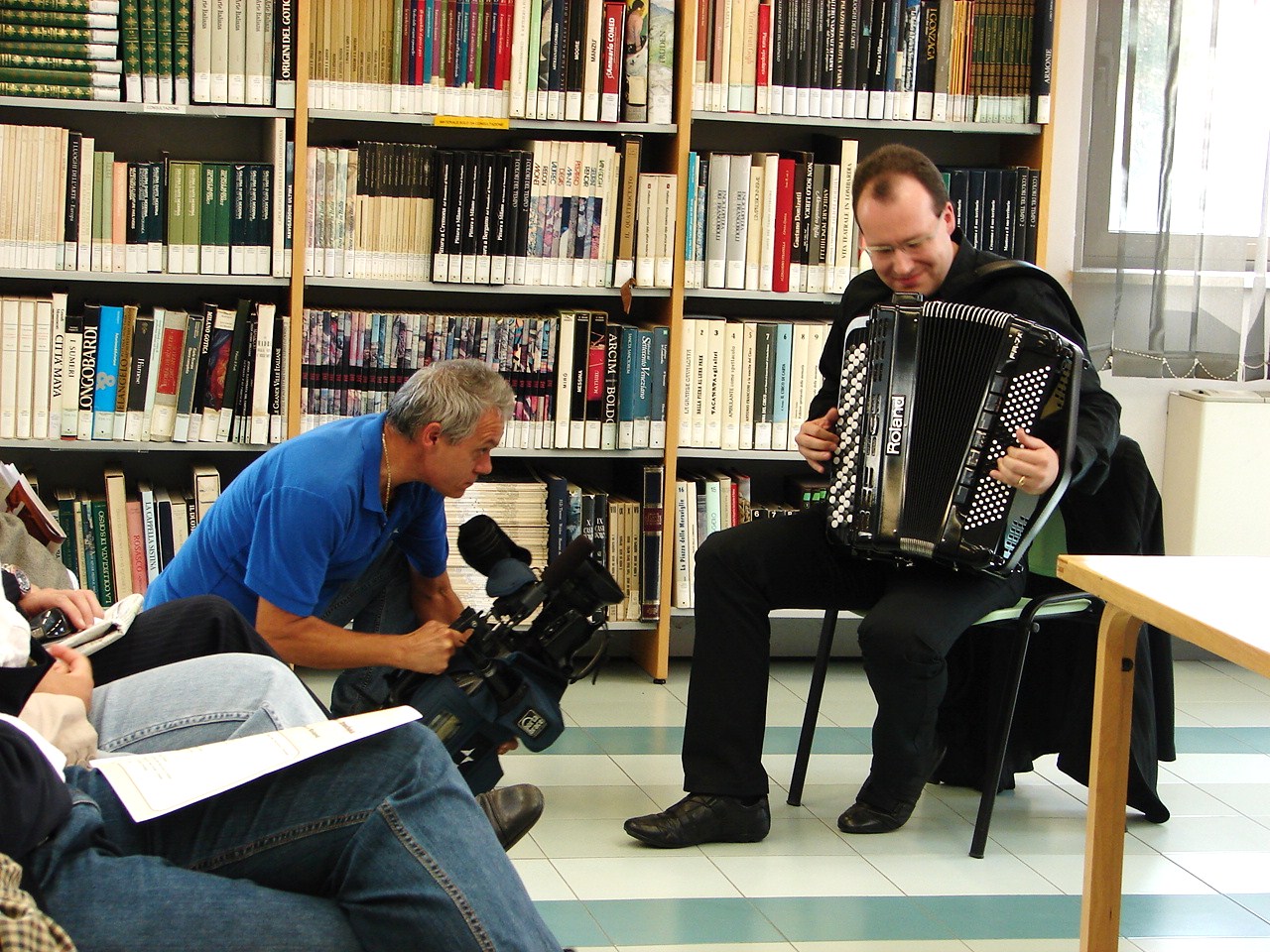 |
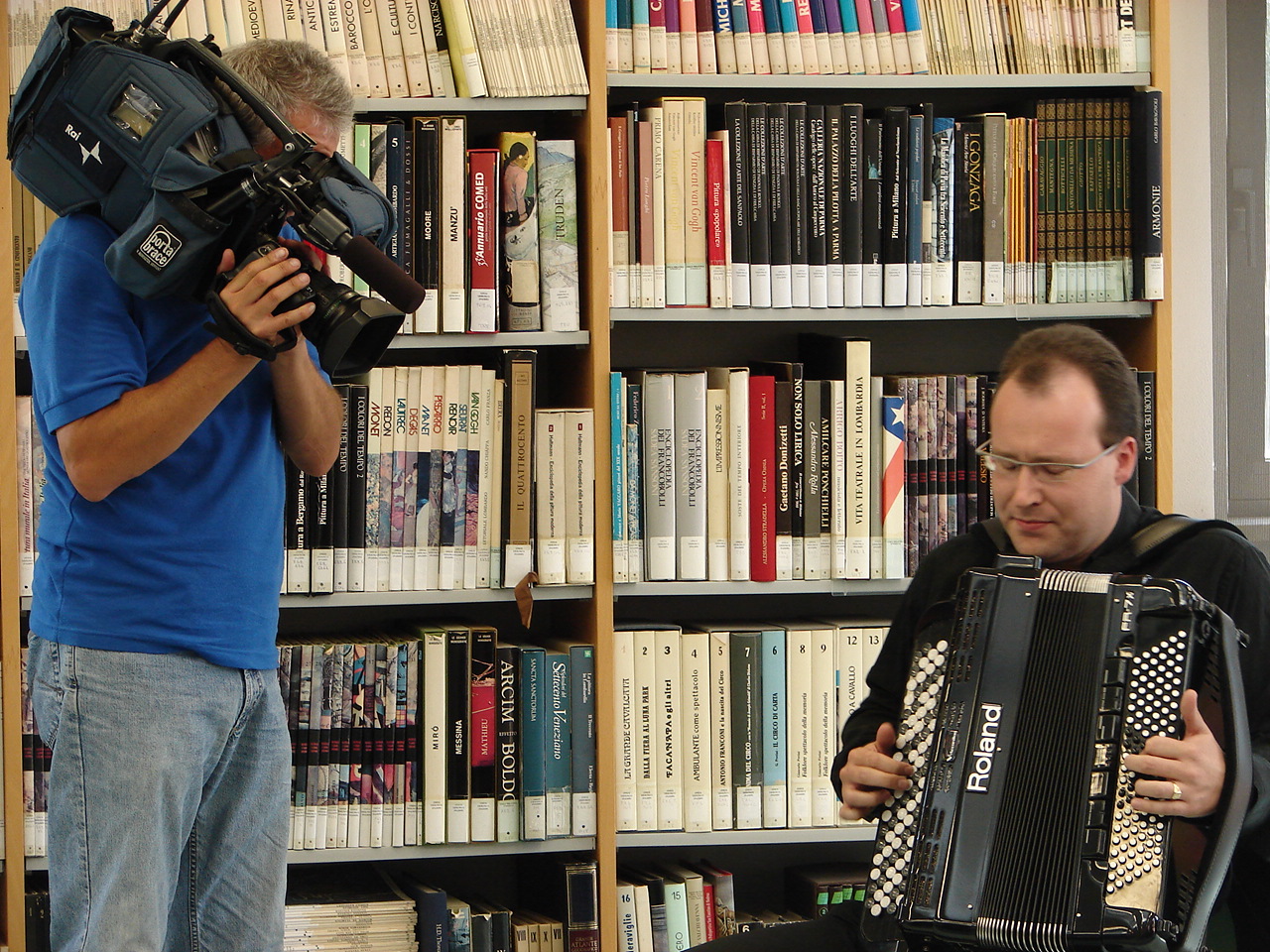
| Roberto Gaetani (Roland R&D Department - Chief Sound Engineer, Roland Europe). | Italian TV RAI filming Ludovic Beier performing. |
 |
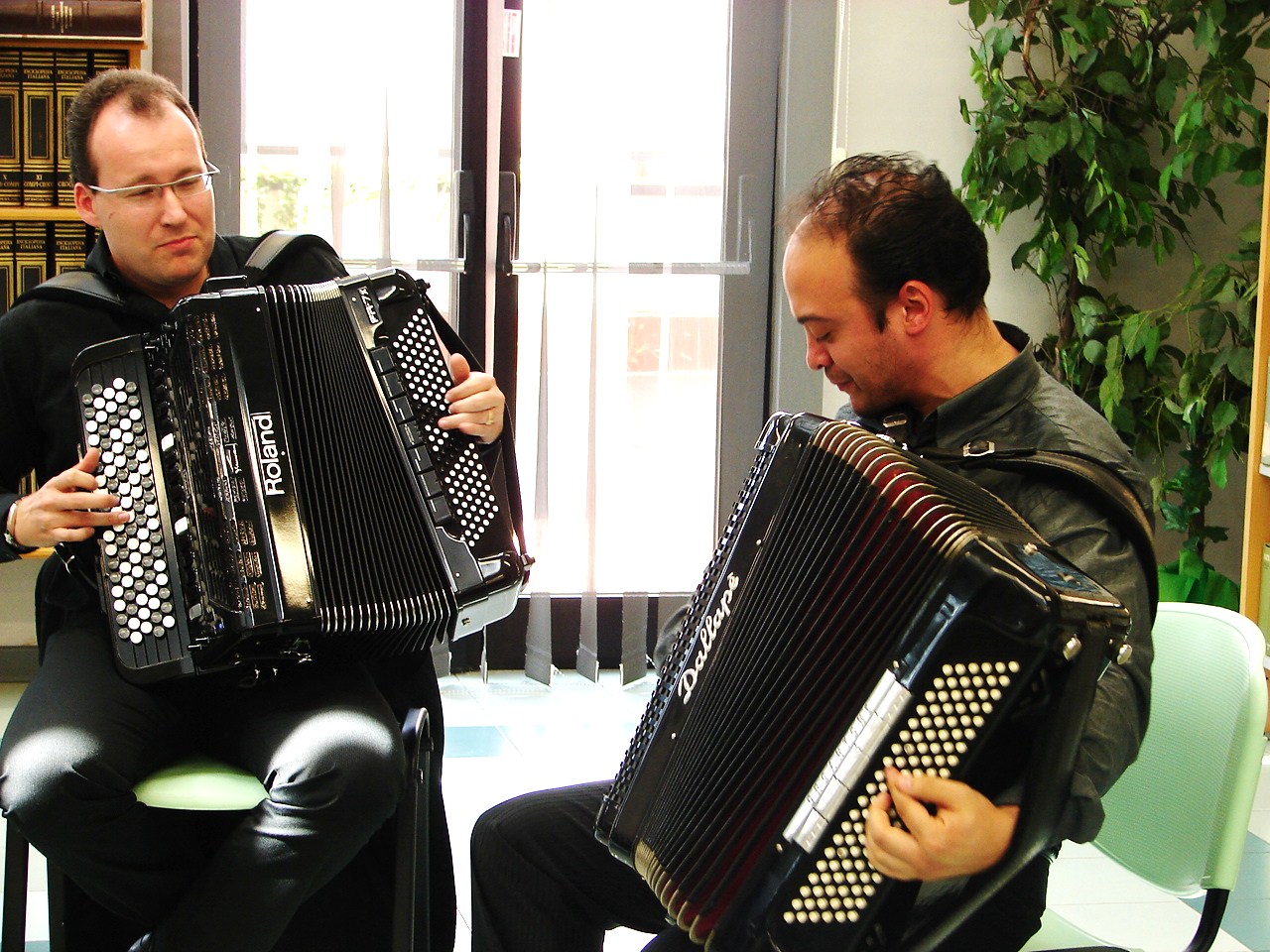 |
| As before | Ludovic Beier and Gianluca Campi playing and accordion duo. |
 |
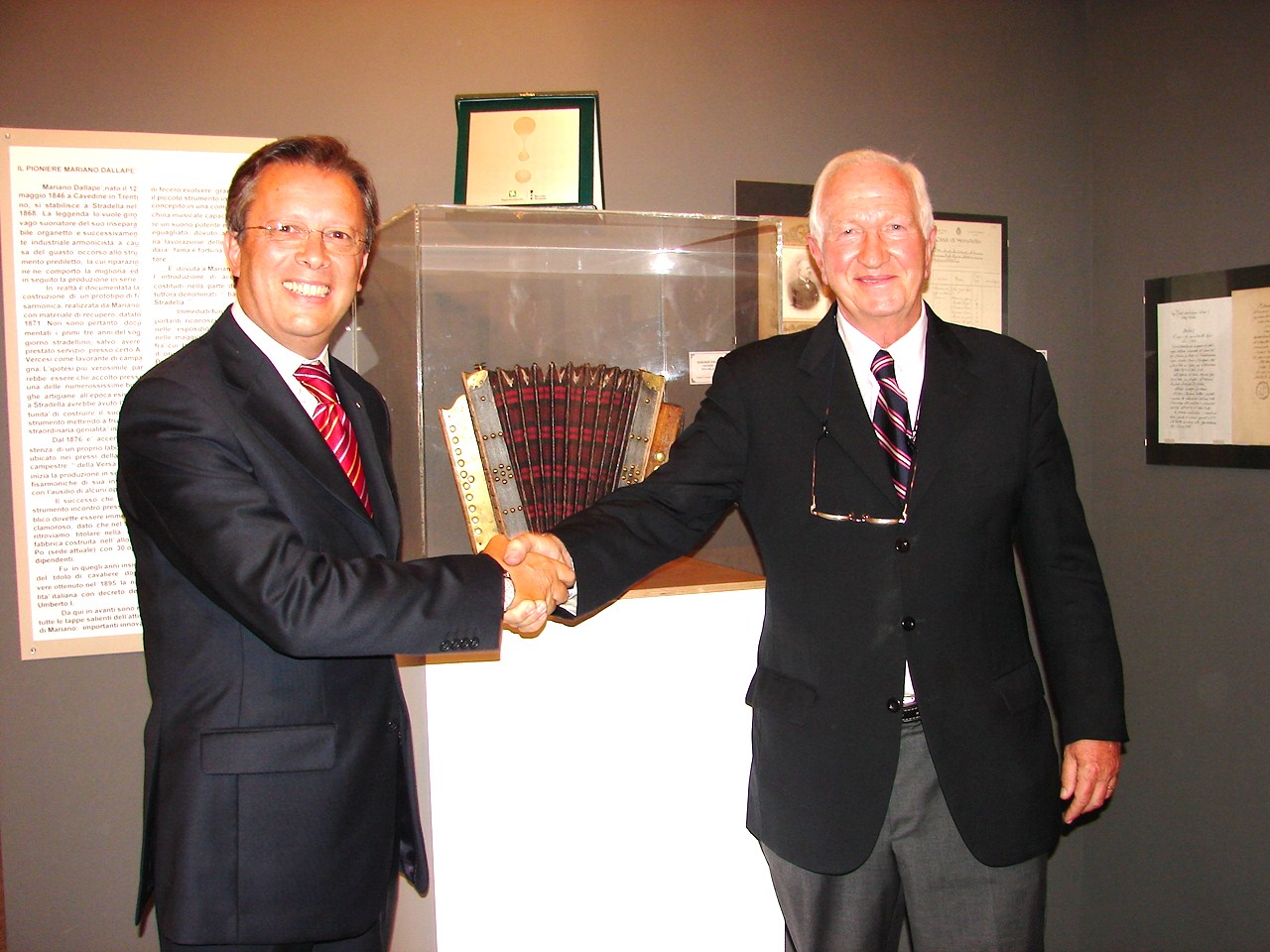 |
| The oldest Dallapé Accordion in the Stradella Museum. | Alfredo Maroni and Amleto Dallapé shaking hands to seal their historic agreement. |
 |
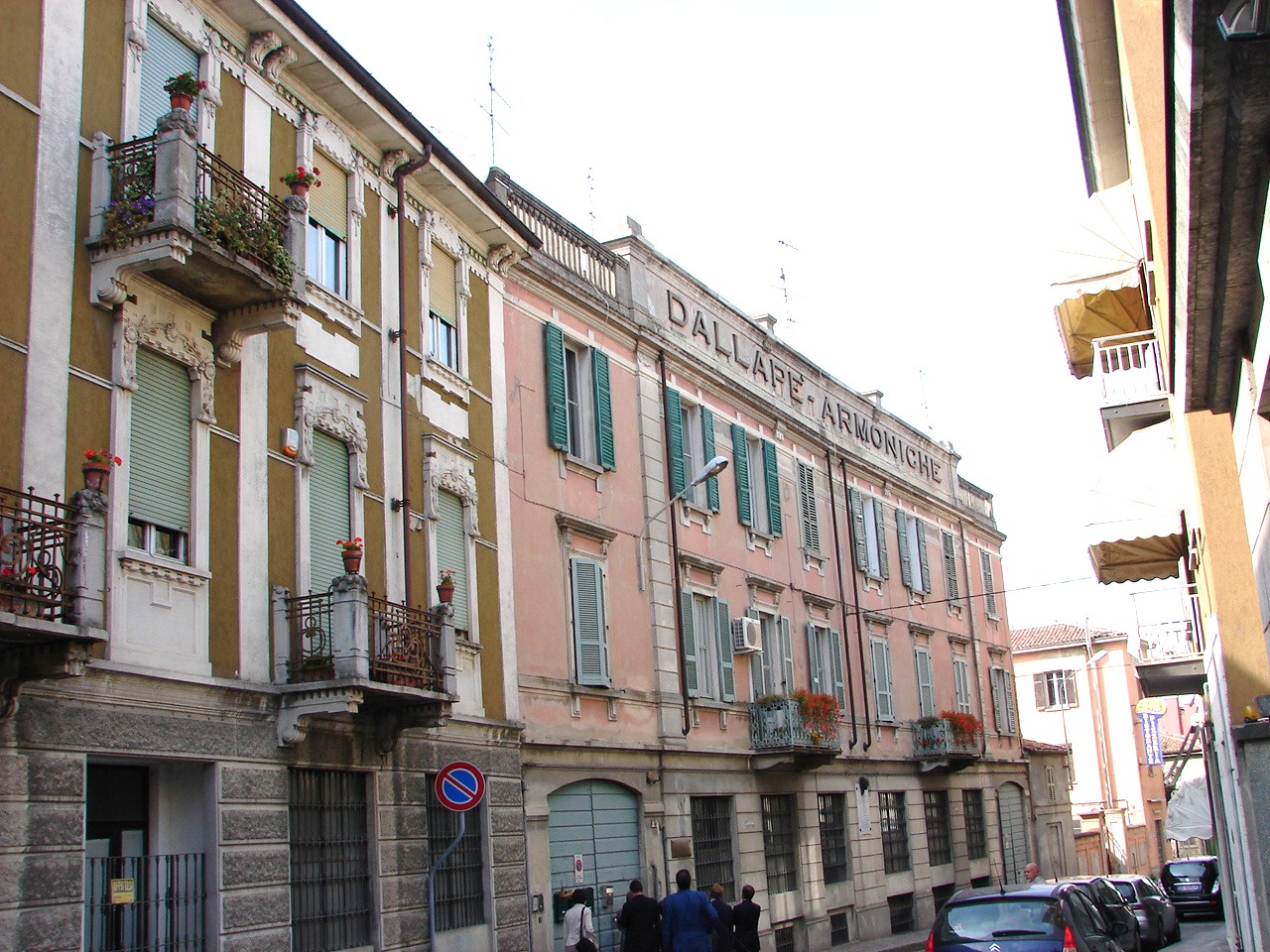 |
| Bianca Maria Dallapé and Amleto Dallapé pose with the oldest Dallape. | A picture of the City of Stradella Dallape Accordion Factory from the street. |
Press Release by Roland Corporation dated 14 September 2010
Cutting-Edge Technology and Traditional Craftsmanship:
Symphony of a Company
In 1868, after much wandering in search of a more rewarding task than working in the fields, Mario Dallapé decided to settle in Stradella, where in 1871 he realized the first prototype of an accordion called a "cassetta" which was built with recycled materials. Following a wave of enthusiasm for the product, from 1876, Mario Dallapé began mass production in their craft shop. The success of the product and popularity of his new instrument was striking: in just a few years, Dallapé could count on a large manpower increase brought about as a direct consequence, with a significant expansion of the company. Around 1890, thanks to the fundamental innovations he designed and produced, the business achieved top awards at national and then international level with such awards as the Diploma "Grand Prix d'Honneur" conferred on the company Mariano Dallapé International at the Exhibition of Paris in 1900. The use of high quality materials and superior design for quality sound, gave to his accordion, then as now, a rare harmony, power and quality of sound. The historic factory accordions Dallapé "will finish the production at the end of 2010, but thanks to the sale of its prestigious name to the famous Japanese electronics factory, Roland, the name "Dallapé" will survive over time and even enhance its prestigious reputation in the history of music world. In 1967 Ikutaro Kakehashi, the founder of the Roland Corporation, a leading manufacturer of electronic musical instruments, travelled to Italy and had the chance to meet some accordion craftsmen. He was so fascinated by this instrument that he purchased two accordions to bring home and from there, started to cherish the dream of creating an electronic accordion. This dream was later on supported also by Francesco Rauchi and Luigi Bruti in Roland Europe, a member of the Roland Corporation group located in Acquaviva Picena, in the Marche region, Italy. Thanks to the advanced state-of-the-art digital technology designs, Roland designed and developed another milestone in the history of digital musical instruments: the V-Accordion, (“Virtual Accordion”) equipped with Roland's very powerful digital modelling technology. “FR” the two characters identifying this instrument stand for Francesco Rauchi as a homage paid by Roland to one of their best collaborators, who passed away a few years ago without ever being able to see his project implimented. The V-Accordion can truly reproduce the various models of traditional accordions, including their different tuning features. As a consequence you can turn a V-Accordion immediately into an Italian accordion, a French musette, a jazz accordion or a bandoneon. In the end, the V-Accordion is not intended to replace the traditional accordion but to compliment it and enlarge its sound potential, while keeping its expressive features unchanged, as well as that peculiar feeling conveyed by a musical instrument you can play by “holding it in your arms”. The digital V-accordion using Roland's innovative technology will be able to bring to the whole accordion world the "anthological" sounds perfectly sampled of the best of the production of the famous Dallapé Accordion Factory, from the beginning in 1876 until today. |